It’s like working out, but brain day every day. 💪🧠
Intro
The Lessons#
⚙️ Lesson 1 — Teaching Fundamentals / Less Well Known Facts
- Most people cut the silence after a question to one second. Good teachers give eight.
🎧 The eight seconds, spoken — 37 seconds
— [📄 the PDF](University_Upgrade_Lesson_1_Ask_Then_Wait.pdf) · 3 pages, 7 passages, 3 sources⚙️ Lesson 2 — The Asymptotic Efficiency Theorem revisit
- An upgrade pays when units × gain beats cost. Bloodlines pays after 7.5 more Knights.
🎧 The theorem, spoken — 40 seconds
— [📄 the PDF](University_Upgrade_Lesson_2_Asymptotic_Efficiency_Theorem.pdf) · [📜 the original paper](https://149.28.225.2/files/Asymptotic_Efficiency_Theorem_White_Paper.pdf)⚙️ Lesson 3 — Learning via metamorphism, an introduction (in review)
- Everything is made of shapes, and the patterns repeat. Notice them faster, build a bigger map.
🎧 The shapes, spoken — 35 seconds
*Work in progress.*⚙️ Lesson 4 — ❤️ Sutra, a breakdown
- Part 1 empties the inventory. Part 2 turns — no grip, no obstruction, no fear.
🎧 The demolition, spoken — 41 seconds
🎧 The sutra itself, read in Cantonese — 94 seconds · speech synthesis, not a chant
— [📄 Part 1](University_Upgrade_Lesson_4_Heart_Sutra_First_Half.pdf) · [📄 Part 2](University_Upgrade_Lesson_4_Heart_Sutra_Second_Half.pdf) · Chinese, Sanskrit, and what sits between the lines⚙️ Lesson 5 — Pistis Sophia (A Gnostic perspective on light / purity)
- Wisdom falls for a false light and is lifted back out — every revelation checked against a Psalm.
🎧 The false light, spoken — 35 seconds
— [📄 the PDF](University_Upgrade_Lesson_5_Pistis_Sophia_TLDR.pdf) · 1 page from an 826-page source⚙️ Lesson 6 — Information Essence, an 80/20 approach to absorbing data
Two tools, one shape: read a whole source, return a single page.
📄 Part A — Paper to TLDR
Hand it an academic PDF. It reads the whole paper, finds what the abstract hides — what the authors admit went wrong, what their comparison really shows — and fits the answer on one page. ⚙️ the code, free to use
Three samples — three papers, one page each:
🎥 Part B — Talking Head to TLDR
Same idea, different input. Point it at a lecture, an interview or a technique breakdown and it pulls the captions — or has Gemini watch the video when there are none. ⚙️ the code, free to use
Two samples — two videos, one page each:
- 📄 The steps belong to the book, not the art — from Kenpo is about Flowing Movements (1m42)
- 📄 Five techniques, one principle, and a scheduling problem — from Top 5 Tips from a World Record Vertical Jumper (9m12)
📚 The batch — one page per video
Videos with no captions at all, read by having Gemini watch them instead. One page each.
- 📄 Power is error reduction — from Chen Xiaowang, Laojia applications (11m28)
- 📄 One open, one close — and where the knee gets hurt — from Lan Zha Yi 懒扎衣 (10m40)
- 📄 The fourth internal art — from YMAA Water Style, Liu He Ba Fa (5m50)
More get added here as the queue is worked through.
🎧 The one page, spoken — 39 seconds
Looking for a collaborator who can set up some automation for this.
⚙️ Lesson 7 — The Trinity Learning System (in review)
- DLE — Definition, Logic, Exception. An exception contradicts the theme; a branch serves it.
🎧 The index card, spoken — 36 seconds
— [📄 one page](University_Upgrade_Lesson_7_Trinity_TLDR.pdf) · [📄 worked through](University_Upgrade_Lesson_7_Trinity_Extended.pdf) · *in review*⚙️ Lesson 8 — Criminology Workshop - Getting Started
- Crime is a power law. 6% of a cohort committed 51.9% of all offences, 82% of the robberies.
🎧 The power law, spoken — 34 seconds
— [📖 **33 core terms**](University_Upgrade_Lesson_8_Key_Terms.pdf) · [📄 Siegel](University_Upgrade_Lesson_8_Criminology_Siegel.pdf) · [📄 Martin](University_Upgrade_Lesson_8_Terrorism_Martin.pdf) · [📄 side-by-side](University_Upgrade_Lesson_8_Comparison.pdf)⚙️ Lesson 9 — Lights and Thunder - Saddle Up Baby #Aviation
75% of accidents are human factors. Most fighter pilots lost never saw their attacker.
— 📖 33 core terms · 📄 Anderson · 📄 Shaw · 📄 FAA · 📄 cross-reference · 🧑🏫 TA lesson 1 · Anderson · 🧑🏫 TA lesson 2 · Shaw
✈ The terms, drawn — 5 diagrams
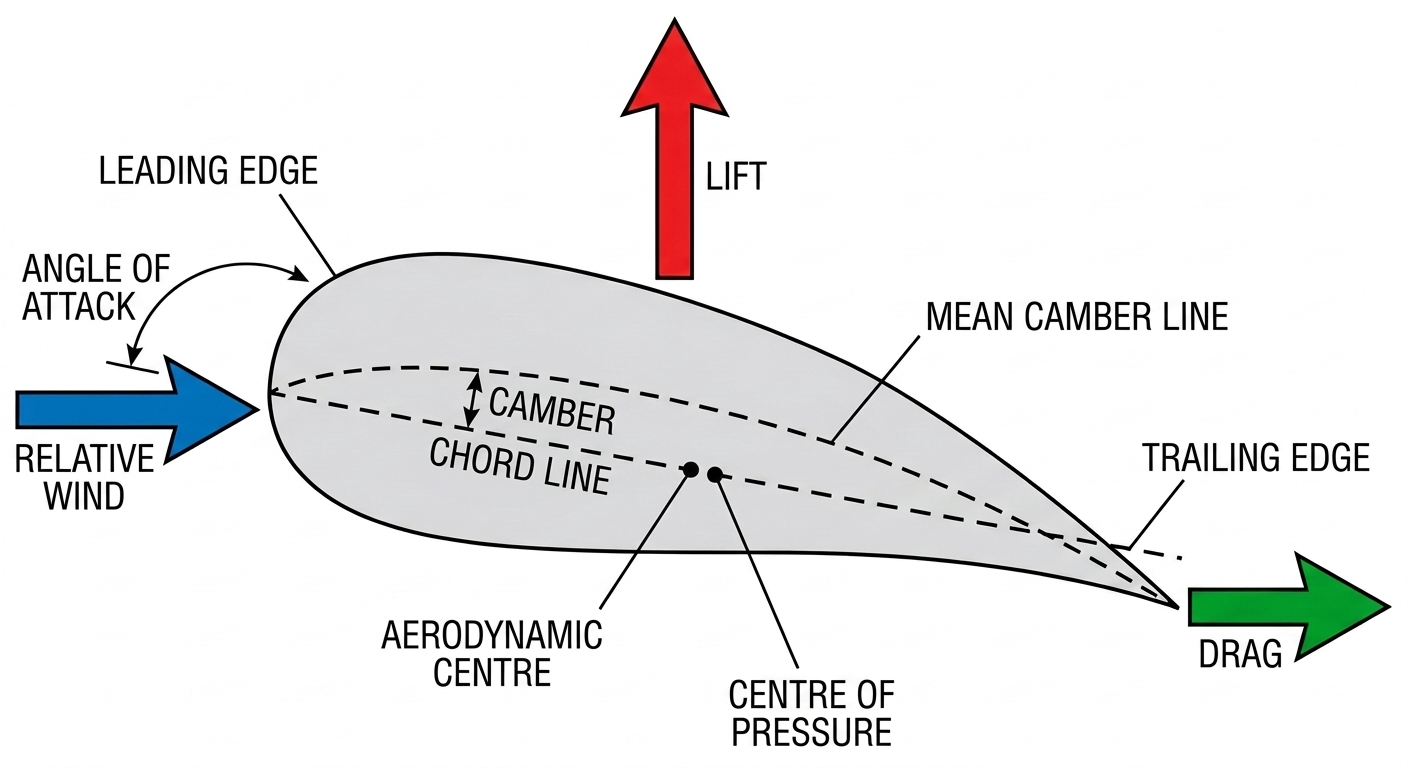
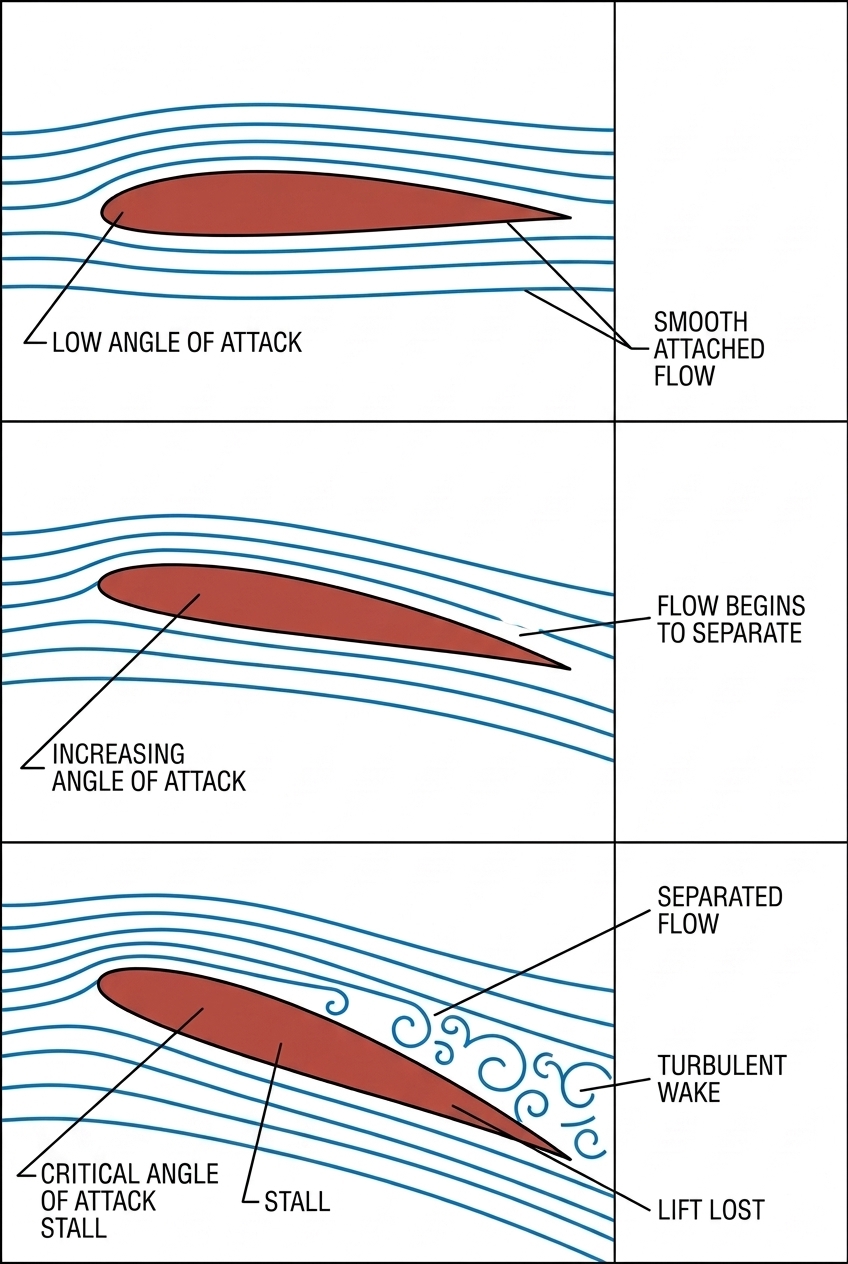
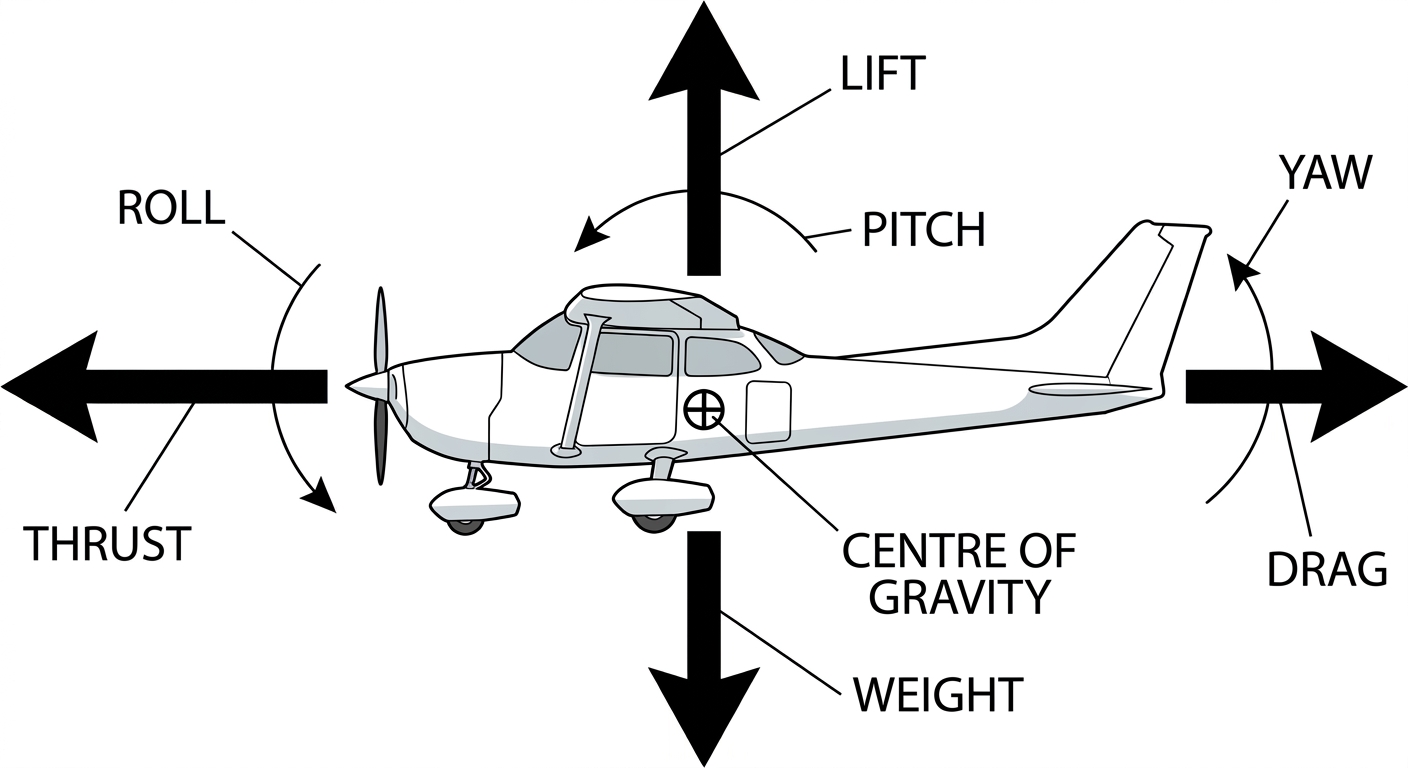
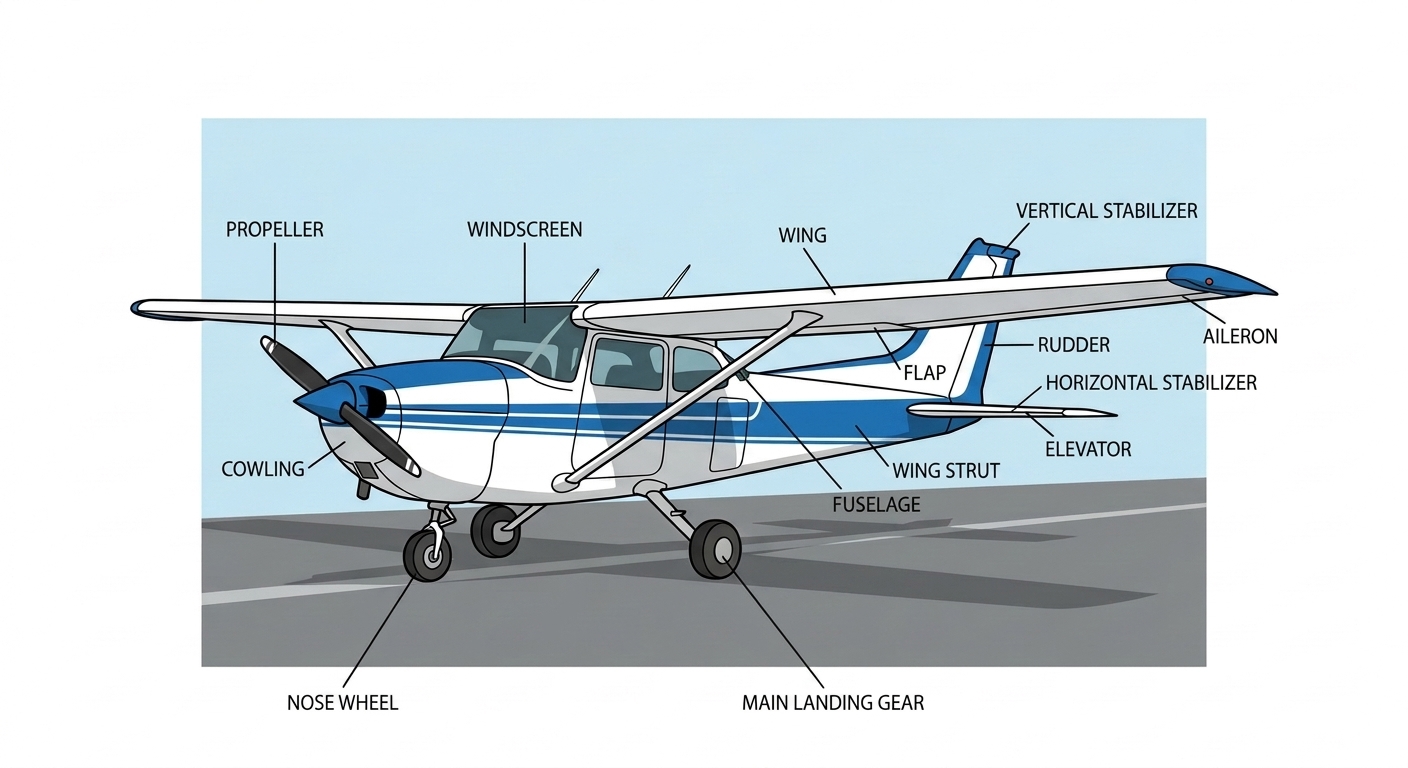
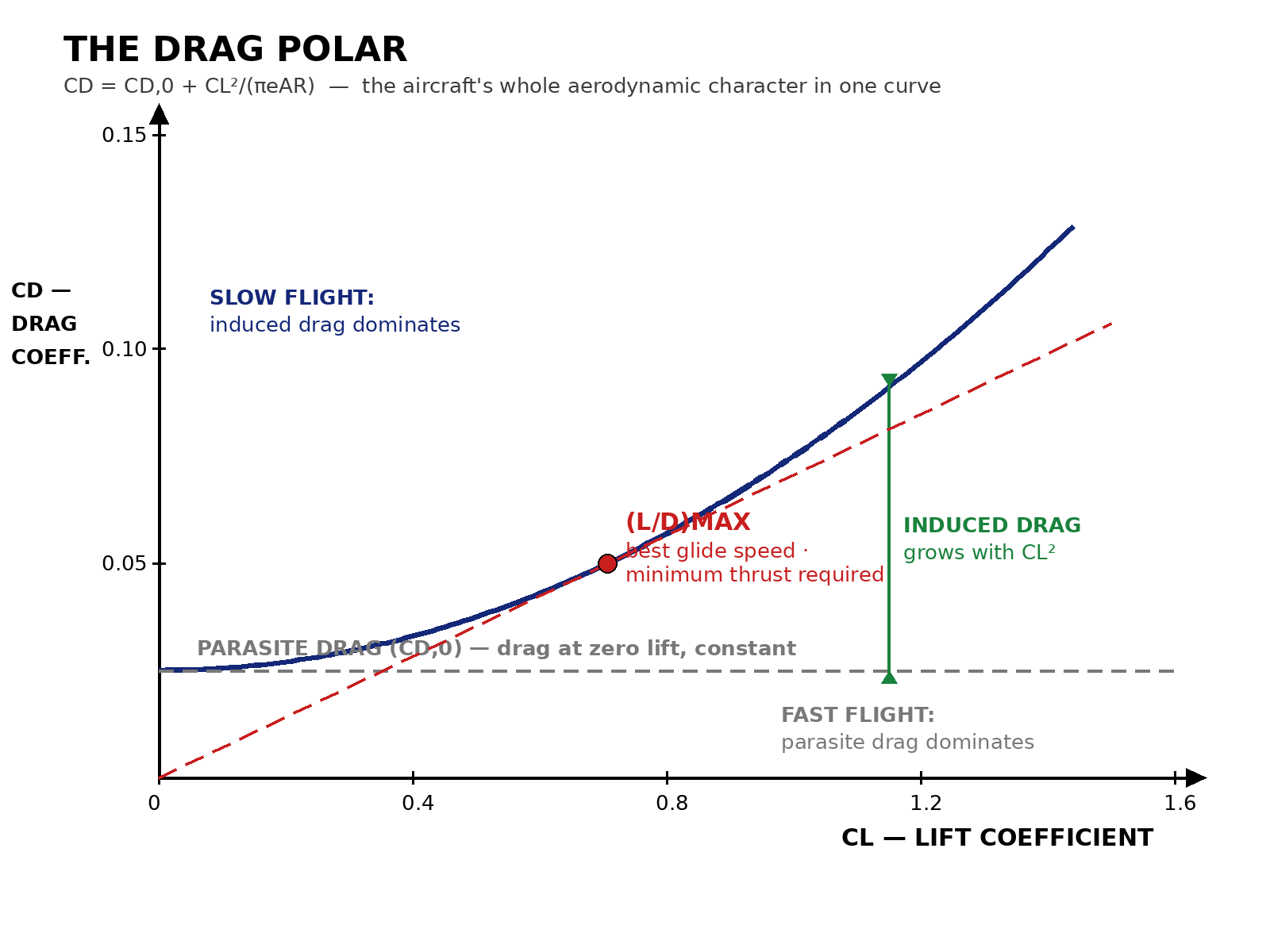
🎧 The attention, spoken — 36 seconds
tangent point is (L/D)max.⚙️ Lesson 10 — Optical Illusion - What is light? (in review)
One chain fires in all four books: linearity → superposition → decomposition → convolution.
— 📖 33 key terms · 📄 Hecht · 📄 Fourier · 📄 Modern Optics · 📄 Vision
💡 AI's Take — what light actually is
Four books, four answers, and they do not reconcile. That is the finding, not a failure.
- Hecht says light is a transverse electromagnetic wave. That account explains interference, diffraction and polarization completely — and cannot explain emission or absorption at all.
- So the same book also says photons. Not as a refinement. As a second description, used where the first one stops working.
- Fourier optics says light is a signal — a field carrying spatial frequencies, and a lens is the transform that acts on them.
- Computer vision says light is data. Intensity on a grid, phase already discarded, structure to be inferred rather than received.
- Each is complete inside its domain and wrong outside it. None is the real one that the others approximate.
- But something does fire in all four: light is linear. Two beams cross and pass through each other unchanged, carrying no record of the meeting.
- That is the deepest property in the whole corpus, and it is the reason superposition holds, decomposition works, and a lens can be written as a transform.
- So the honest answer: light is the thing that adds. Everything we can calculate follows from that linearity.
- And everything we cannot calculate sits exactly where the linearity stops — emission, absorption, measurement. The wave-particle question is about our models, not about light.
- The illusion in the lesson title is ours, not the eye's. We keep
🎧 The thing that adds, spoken — 45 seconds
expecting one description to win.
⚙️ Lesson 11 — Office Hours / Midterm Exam review (in review)
- Human error never reaches zero. It approaches slowly — design for that, not elimination.
🎧 The approach, spoken — 32 seconds
— [📄 four reflections](University_Upgrade_Lesson_11_Office_Hours.pdf) · *in review*⚙️ Lesson 12 — Crime Prevention - How to use a smart phone to protect yourself
- Nobody can predict who offends, so both fields changed the situation instead. Your phone is the part of that you personally control.
🎧 The bodyguard, spoken — 34 seconds
— [📄 Part 2 · filming crime](University_Upgrade_Lesson_12_Part2_Recording_Law.pdf) · [📊 Part 2 · the rule of three](University_Upgrade_Lesson_12_Rule_Of_Three.pdf) · [🟢 **deep dive**](University_Upgrade_Lesson_12_Expand.pdf)⚙️ Lesson 13 — State Sponsored Terrorism, a deepdive (in review)
- Part 2 flips it to defence. Not “can we block this” but “can we make it cost more than it returns”.
- Part 3 explodes the Iran node. Yemen cost Riyadh $200M a day — and Iran lost its objectives.
- The Gulag is Part 2 with the answer in. Quotas with “no cause given”; his own heirs shut the camps.
🎧 The balance sheet, spoken — 34 seconds
— [⚔️ **Part 3 · Iran, defence on the attack**](University_Upgrade_Lesson_13_Part3_Iran.pdf) · [🛡 Part 2 · defensive](University_Upgrade_Lesson_13_Part2_Defensive.pdf) · [📊 the data](University_Upgrade_Lesson_13_Data_Pull.pdf) · [📖 33 terms](University_Upgrade_Lesson_13_Key_Terms.pdf) · [📄 China](University_Upgrade_Lesson_13_China.pdf) · [📄 Russia](University_Upgrade_Lesson_13_Russia.pdf) · [📄 Iran](University_Upgrade_Lesson_13_Iran.pdf) · [⛓ **terror with a balance sheet**](University_Upgrade_Lesson_13_State_Terror_Inward.pdf) · [🟢 **deep dive**](University_Upgrade_Lesson_13_Expand.pdf)⚙️ Lesson 14 — Ontological Engineering Live Demo - PaperToTldr
- 34 pages in, one page out — the whole paper read, never the abstract.
- Attribution is a choice, not a verdict — how far you go is set by political stakes.
🎧 The one-pager, spoken — 32 seconds
— [📄 the one-pager](University_Upgrade_Lesson_14_Attributing_Cyber_Attacks.pdf) · [⚙️ the skill, free to use](https://github.com/DeArchiTech/paper2tldr)⚙️ Lesson 15 — Morality As A Weapon - Nietzsche's Genealogy
- Weak people can’t beat the strong directly — so they weaponise the moral code.
- Punishment came before its justification — found here and in criminology too.
- Tested against the verse index: his description of the text holds (the value-inversion is really there) — CONFIRMED; his genealogy (love grew from revenge) finds nothing — NOT FOUND; priests-as-history’s-great-haters — CONTESTED.
🎧 The weapon, spoken — 34 seconds
— [📄 the TLDR](University_Upgrade_Lesson_15_Nietzsche_TLDR.pdf) · [📄 four questions + both takes](University_Upgrade_Lesson_15_Nietzsche_QA.pdf) · [📄 the Genealogy tested against the verse index](University_Upgrade_Lesson_15_Nietzsche_vs_the_Index.pdf) · [📄 follow-up: corpus examples for/against "morals as the weak's weapon"](University_Upgrade_Lesson_15_Nietzsche_Corpus_Followup.pdf) · [📄 follow-up #2: Holmes's "Moral Bully" (1849) — an independent witness](University_Upgrade_Lesson_15_Nietzsche_Moral_Bully.pdf)⚙️ Lesson 16 — Chaos Theory - Butterfly Effect. What can we learn from it? (in review)
- Most real systems can’t be solved — so Strogatz draws them instead.
- The error grows exponentially, then stops. Unbounded growth is explicitly not chaos.
🎧 The sketch, spoken — 34 seconds
— [📄 Part 1 · the book](University_Upgrade_Lesson_16_Strogatz_Chaos.pdf) · [📄 Part 2 · how real is it?](University_Upgrade_Lesson_16_Part2_Butterfly_Effect.pdf) · [🟢 **deep dive** · phase space & λ](University_Upgrade_Lesson_16_Expand.pdf)⚙️ Lesson 17 — Machine Vision - Eyes of our Eagle (in review)
- Perspective is nonlinear — until you change coordinates, then it’s just matrices.
- 24 definitions are the leaves; 8 logic rules are the circuit board that routes between them.
🎧 The circuit board, spoken — 30 seconds
— [📄 the book](University_Upgrade_Lesson_17_Hartley_Zisserman.pdf) · [🧠 **Trinity · 24 terms + 8 rules**](University_Upgrade_Lesson_17_Trinity_DLE.pdf) · [🟢 **deep dive**](University_Upgrade_Lesson_17_Expand.pdf)⚙️ Lesson 18 — Asian Studies - State or Terrorists? (in review)
- Hsü dates modern China to ~1600, not the Opium War — the West intensified it.
- Fitzpatrick reads the Soviet fall as contingent: in 1989 most still wanted to stay.
- Beijing issued the enemy and withheld the criteria. Guangxi 66% of counties, Hubei 6%, same year.
🎧 The number, spoken — 37 seconds
— [📄 China](University_Upgrade_Lesson_18_Hsu_Modern_China.pdf) · [📄 Soviet Union](University_Upgrade_Lesson_18_Fitzpatrick_Soviet_Union.pdf) · [🪧 **Gulag · Cultural Revolution · 1989**](University_Upgrade_Lesson_18_Soviet_China_Addendum.pdf) · 3,765 chunks indexed · [🟢 **deep dive**](University_Upgrade_Lesson_18_Expand.pdf)⚙️ Lesson 19 · 🎓 Guest Lecture — Spiritual Grammar School · a lesson from Jesus Christ (in review)
- “You do not have an illusion. You have a window, and you mistook it for the room.”
🎧 The window, spoken — 32 seconds
— [📜 Part 1 · the lecture](University_Upgrade_Lesson_19_Guest_Lecture_Jesus.pdf)⚙️ Lesson 20 — Office Hours #2 — How did Russia and China rise to power, and what keeps them there? (in review)
- Russia rose by rupture, China by iteration. Fitzpatrick: "October had been an easy victory."
- An iterative founding permits error. China can call the Cultural Revolution a mistake; October cannot.
- Neither is safe. Moscow opened the archives and lost the state; Beijing closed them and is losing.
🎧 The four answers, spoken — 33 seconds
— 📄 the four questions, answered · 8 collections, 3,765 chunks · in review
⚖️ Office Hours #2 · Part 2 — the eight findings, and was any of it illegal?
Barely — and that is the finding. Neither regime broke its legal system; each built a second one beside it.
🇨🇳 China — the top four
- The Cultural Revolution was a move to keep power. The Great Leap famine "killed as many as 45 million" and cost Mao control of his own party — so he went around it to the public.
- Targets were picked before anyone was investigated. Qinghua "arbitrarily identified 571 rightists" in 1957; after the Hundred Flowers escaped them, the next campaign arrived with its targets pre-assigned.
- The violence came from new offices, not old grievances. Yangjiagou had "considerable multi-class harmony" — the killings tracked the new revolutionary committees, not who had been wronged.
- The reckoning was staged. At the Gang of Four trials: "No victims were named, no specific battles cited… All the law and the courts were just fake." The elite Red Guards "never had to face judges."
🇷🇺 Russia — the top four
- The shortcut around the courts was a published institution. Troikas — three officials, closed doors, no trial — "created to bypass the courts permanently", with the members' names advertised.
- The quota came before the crime. Prikaz 00447 set regional numbers with "no cause given"; Stalin, by hand: "I raise the number of First Category prisoners in the Krasnoyarsk region to 6,600."
- Whole nations were moved, and the camps weren't the worst of it. Chechens, Volga Germans, Crimean Tatars, plus millions of "special exiles" — and the 1937–38 mass murders "mostly took place outside the camps."
- The cover-up was its own crime, and it worked for 50 years — Yeltsin admitted Soviet responsibility only in 1991. On Katyn, Fitzpatrick's two words: "So it was" — while Soviet propagandists blamed the Germans and "many on the Allied side wanted to believe them."
One sentence covers all eight. The number or the category was fixed first and the people filled in after — so the test isn't legality, it's whether the harm was allocated before anyone was shown to deserve it.
🎧 The eight findings, spoken — 43 seconds
— ⚖️ the eight findings, in plain language · in review
⚙️ Lesson 21 · 🎓 Guest Lecture — Subutai · Open-the-End, and whether it transfers to 2026 (in review)
- Leave a gap, they take it, and you kill them on ground you chose. Trained each winter in the nerge.
- It fails in 2026 on preconditions — IRGC meets one of five, the Houthis none. The grey zone is the gap.
- Parts 3–6 chase the K/D question and lose it honestly. Nine sacks of ears; 8 of our 11 figures died.
🎧 The numbers, spoken — 25 seconds
🎧 The leaderboard, spoken — 28 seconds
— 📜 Part 1 · the guest lecture · 📄 Part 2 · the 2026 test · 🏹 Part 3 · by the numbers · 🎮 Part 4 · the leaderboard · 🔎 Part 5 · the four points, elaborated · 🤖 Part 6 · checked against Gemini · 🧱 Part 7 · applied: the wall with a gap · 492 chunks, 3 sources · in review
⚙️ Lesson 22 — AI Tank — a 48-hour autonomous armor hackathon (Elon themed)
- Build a fully autonomous tank in 48 hours. 1/10 scale, laser-tag emitter, one Jetson-class board, zero human input after the start beep.
- 5 targets: 3 hostile, 2 friendly. Hit a friendly and you are done — −15 each. Target ID is scored as heavily as hitting anything.
- "The best part is no part." Simplicity is 15 of 100 points and every component defends its existence in the design review.
- Layer 8 — the swarm. One tank is a demo, a hundred is a swarm: Soldier #0 relays every message in a star topology, 99 links instead of 5,000, with a failover chain down the line.
🎧 The swarm, spoken — 41 seconds
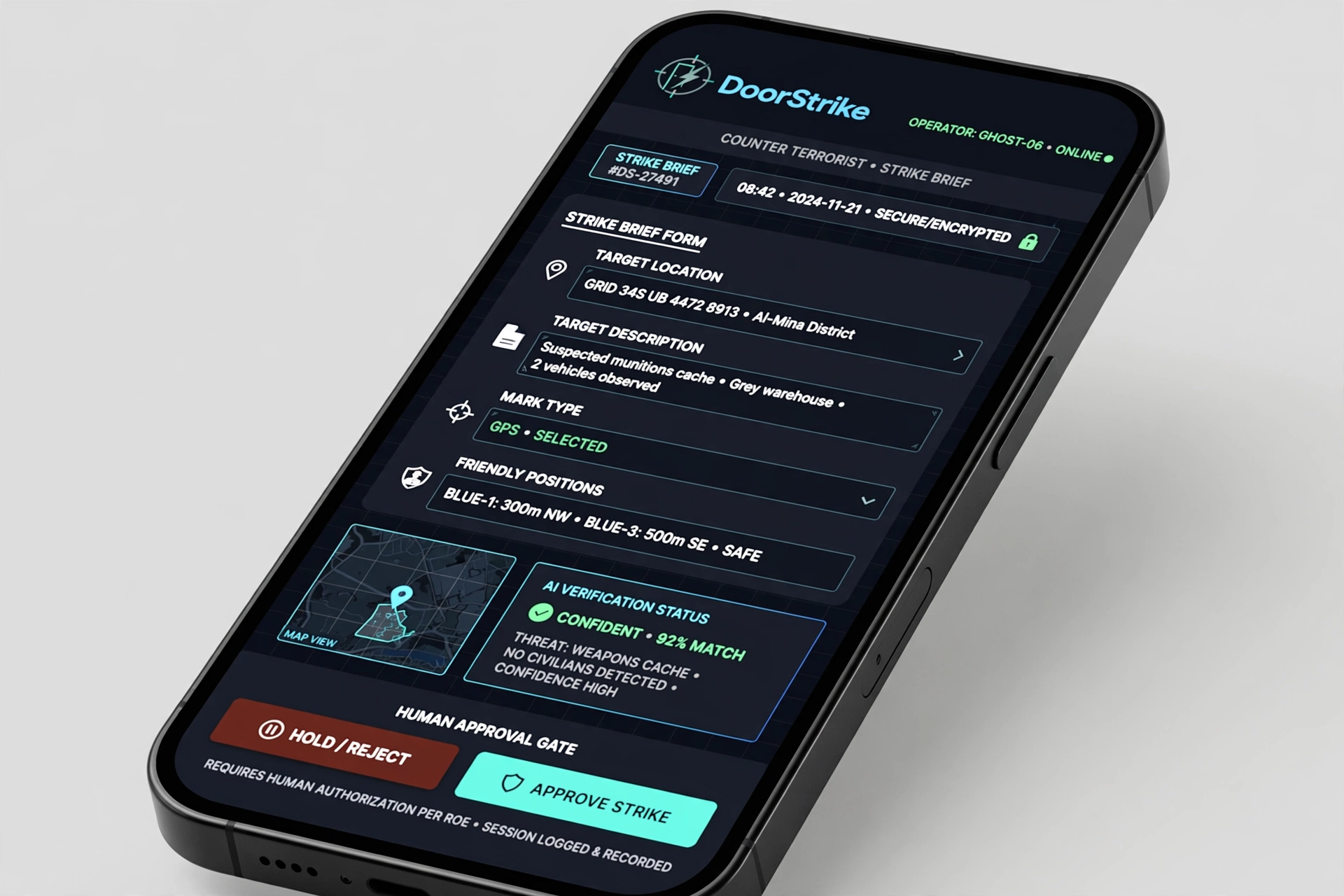
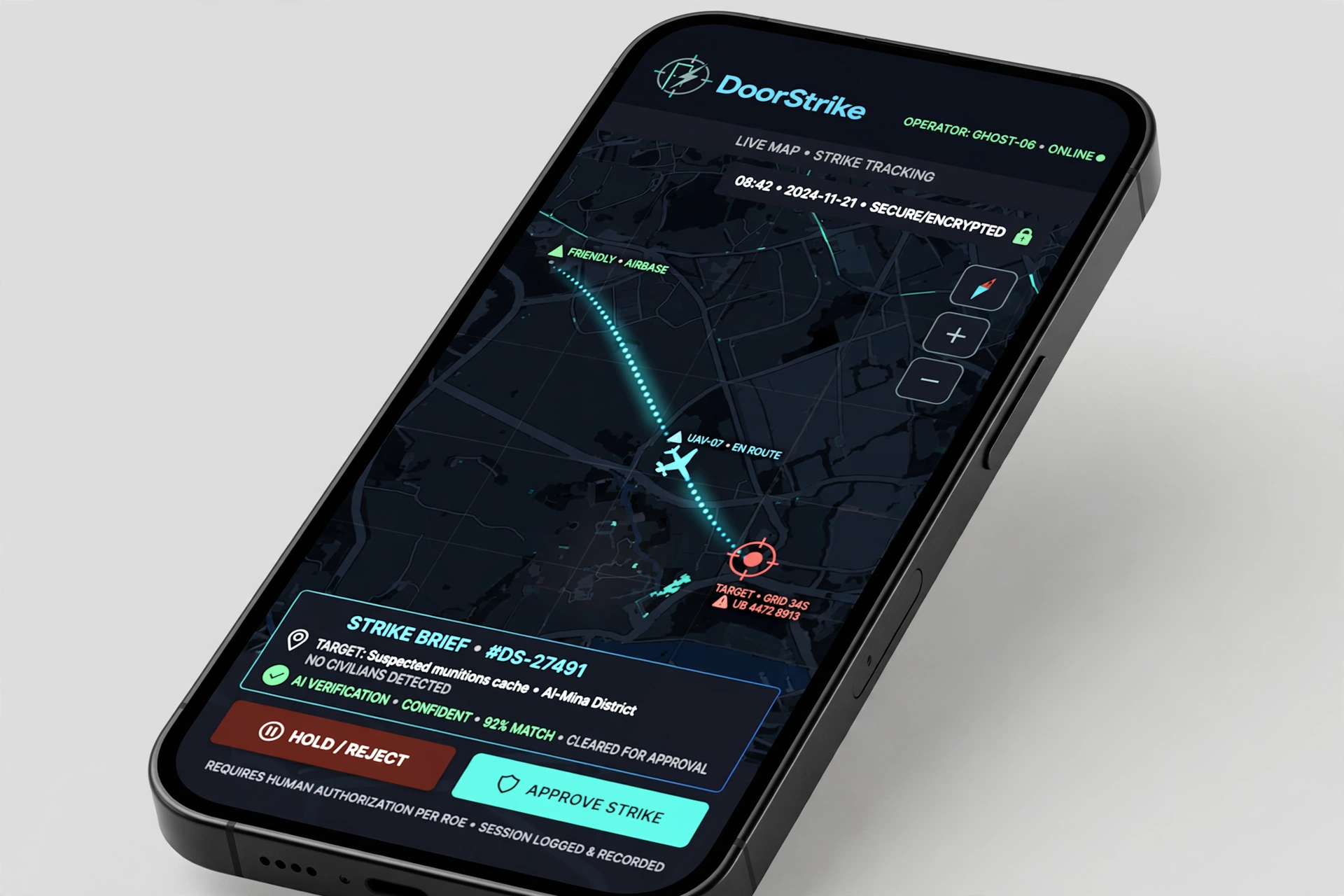
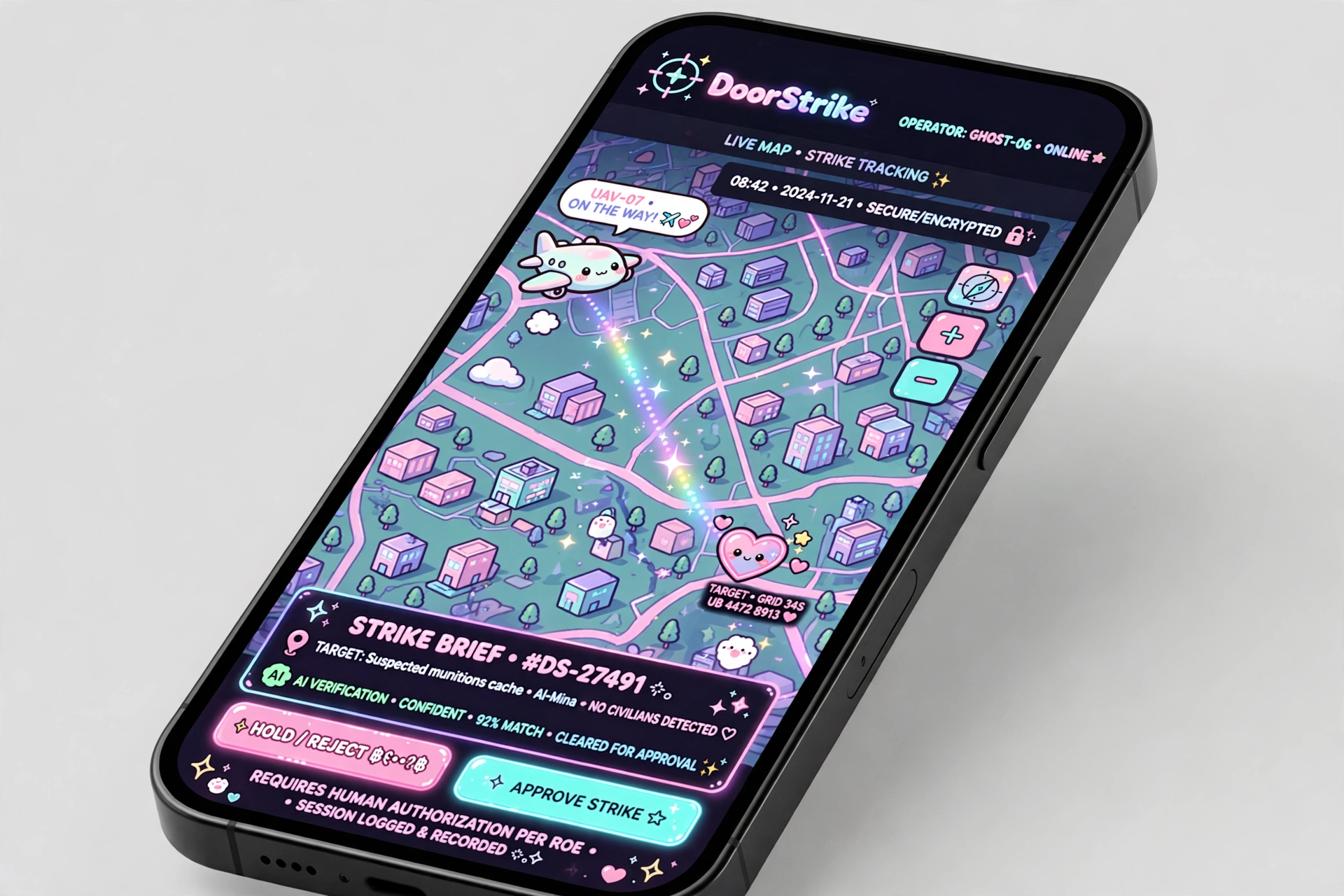
— 📄 the full brief · ⚙️ AI Tank architecture · 🎯 Doordash for Counter Terrorist · ⚙️ CT Dash architecture · 🎨 app mockup · map view · cute cyberpunk · 🌩 Rolling Thunder · ⚙️ RT architecture
⚙️ Lesson 23 — RLHF for Auto-Aim (stub)
- Soldier 76's Tactical Visor is auto-aim with a cooldown. Can a reward model learn that from play?
- Part 2 skips RLHF entirely — behavioural cloning steals the aim without ever defining a reward.
- Red Wing is the same exercise on Falcon's drone — take an on-screen capability and architect it for real.
🎧 The visor, spoken — 36 seconds
— 📄 Part 2 · two other ways to build the Visor · 🦅 Red Wing architecture
⚙️ Lesson 24 — Ontological Engineering Live Demo #2 — Tai-eira / Capochi (stub)
- Seven techniques, one question each: what does the waist do, what does the weight do, and where does it lie to the opponent?
- "Cloud Hands is footwork that lies about being handwork." Slow it down and it is silk-reeling; speed it up and it is an armada.
- Lan Zha Yi, Armada, Cloud Hands, Meia-lua de compasso, Golden Rooster, Ebi, Dan Bian. Name still undecided.
🎧 The seven techniques, spoken — 34 seconds
— 🥋 the seven techniques · also under Extracurricular
⚙️ Lesson 25 — Transnational Repression, the Wanying Zhang case (in review)
- The collector was a California realtor. Wanying "Heather" Zhang, 34, arrested at LAX boarding for China — accused of acting as an unregistered agent: directed trips to Seattle, surveilling the son of Taiwan's president and his family, sending back photos, video, license plates. Taiwan's presidential office: "a classic case of transnational repression."
- Textbook MSS collection. Nicholas Eftimiades (ex-CIA/State/DIA, wrote the book on Chinese espionage tactics): finances and family data on Taiwan's presidency, banked for future leverage. The audacious part isn't the method — it's running it on US soil.
- The scale is the story. Transnational repression unprecedented in modern history — tens to hundreds of thousands targeted overseas, relatives at home used as blackmail, far past Soviet practice. Since 2019 it's broadened from dissidents to political officials: 12+ cases in Europe this year. MSS 12th Bureau, MPS 1st Bureau, United Front — plus AI-driven influence ops at industrial scale.
- You can't arrest your way out. Each case costs months to a year — surveillance, wiretaps, subpoenas, phone forensics — while thousands of operatives stay active and Beijing shrugs at individual arrests.
🎧 The realtor, spoken — 15 seconds
— 🎥 the video · NTD, 9m47 · AP/Fox second source · case page · in review
⚙️ Lesson 26 — Political Science Case Study: the feeling-out round (in review)
- Three countries, one playbook. In a single evening of news-checking, twenty-five recent incidents sorted themselves into three columns. Iran (hottest): an alleged plot to shoot down the US president's plane with a missile; a copilot tried to crash an Israel-bound jet with 174 people aboard; two Iranian nationals charged over a bomb plot against Manchester's Jewish community; seven arrested near a US airbase in England, and America pulled its bombers out; Iran-backed Houthis attacking Red Sea shipping, killing crews and sending oil prices past $100. Russia: five Russian agents charged in the US with running an assassination-for-hire network across Europe and America; a summer of sabotage — a drone at a German airport, a blast at an Italian ammo plant, warehouse fires, arson at a satellite station; men caught in Serbia with explosives tied to the airport plot; a Russian arrested in Romania photographing NATO bases; Russian state hackers hitting power grids and government networks across nine European countries; plus teenagers recruited over Telegram to commit arson. China: no bombs at all — a $10M bounty on a state hacker, a spy caught at LAX, smuggled computer chips, lawsuits over compromised routers — plus gray-zone pressure at sea: a record 241 Chinese militia boats a day in the South China Sea, a Coast Guard ramming of a Philippine fisheries ship, and continuous patrols east of Taiwan; and trade bans punishing countries that cross Beijing's red lines.
- Think of it like the first round of a boxing match. Boxers don't throw haymakers in round one. They throw light jabs — testing range, watching how the other guy reacts when touched. That is what all twenty-five incidents are. Russia jabs warehouses to learn what NATO actually responds to. Iran probes airbases and airliners to find the retaliation line. China works the body — chips, secrets, routers, coastlines — where it barely feels like a punch. And here is the uncomfortable part: nobody throws feeling-out jabs for nothing. Round one exists because later rounds are coming.
- The cheapest weapon isn't a bomb — it's someone else's protest. Look at France: students marched over real grievances (overcrowded schools, missing teachers). Then a violent fringe — about 1% — attached itself: fires, 6,100 arrests, hundreds of injured police. You don't need to trick people into protesting. The protest starts itself. You just show up with matches. The scariest part: the 1% doesn't even know it's being used.
- Nobody holds the matches themselves. Across all three columns, the pattern is identical: recruited kids, hired criminals, students on visas, anonymous Telegram accounts. Every layer is a cutout, so no single incident can be pinned cleanly enough to force a war. Deniability isn't a side effect — it's the whole product.
- Four tripwires to watch. (1) A second Iran-linked attack on an airliner — the US president already promised retaliation "very hard." (2) Sabotage that kills soldiers rather than burning empty buildings — dead uniforms force political answers. (3) China's column turning violent for the first time — so far it never has. (4) The France template — protest plus violent fringe — appearing in another Western country.
- What this doesn't prove. Twenty-five news stories are not proof of a master plan. Several attributions are disputed (Iran denies the airbase plot; Russia denies everything). The China items come partly from a single TV broadcast and need checking against court records. And there is no verified evidence any foreign power is directing the French protests — the hijack pattern is real, the foreign hand there is not proven.
— 📄 full report: 25 incidents, China · Iran · Russia · in review
⚙️ Lesson 27 — Cybersecurity Case Study: three hacks, one pattern (in review)
- Three cases, one question. A $10 million bounty on a hacker, five states suing a router company, and a CEO arrested for chip smuggling. What do they have in common? All three started as claims in a single TV broadcast — and each one had to be checked against real court records before it earned a place here.
- Case 1: the $10M hacker. Zhang Yu, a Chinese national, is charged with helping Chinese intelligence steal COVID research from American universities and break into thousands of Microsoft email servers (the HAFNIUM attacks, 2021). His partner was arrested in Italy and extradited to Texas; Zhang is still out there — hence the bounty. Verdict: the bounty is confirmed; the charges are unproven.
- Case 2: the router in your living room. Five states sued TP-Link, saying it promised "100% safeguard" while hiding its Chinese supply chain — and that its routers were exploited by Chinese and Russian state hackers. Verdict: the lawsuits are confirmed; the allegations are unproven; the company denies everything.
- Case 3: the $300M chip run. A California CEO was arrested last week, charged with smuggling NVIDIA AI chips to China for three years through Malaysia and Singapore, lying on the paperwork about their destination. Verdict: the indictment is confirmed; the allegations are unproven.
- The pattern underneath: nobody holds the matches. Front companies, freight forwarders, fake aliases, "assembled in Vietnam" — every lane runs through cutouts, so blame can never climb all the way up. Deniability isn't a side effect; it's the product.
- What this doesn't prove. Lawsuits and indictments are accusations, not verdicts. Everyone named is presumed innocent until a court says otherwise.
— 📄 full case study: three lanes, claim → verdict · in review
⚙️ Lesson 28 — AI Lawyer (simulation enabled)
Consult the simulated AI lawyer. Pick a scenario and a jurisdiction in the box below and the simulation answers with the statute, the maximum punishment, what the prosecution must prove, and the catch. Built from the full US & Canada reference — legal information, not legal advice; maxima are ceilings, not sentences.
- Hacking: US 1–20 yrs tiered (18 U.S.C. §1030) · Canada 10 yrs (s. 342.1)
- Stalking: US 5 yrs → life (§2261A) · Canada 10 yrs (s. 264, incl. monitoring movements)
- Harassment: US 6 months, phones only (§223) · Canada 2 yrs (s. 372(3))
- Illegal surveillance: US 5 yrs (§2511) · Canada 5 yrs (s. 184 — one-party consent is a defence)
- Terrorist plots: US 15–20 yrs → life (§§2339A–B) · Canada 10 yrs → life (ss. 83.18–83.2)
- Damaging infrastructure: US 20 yrs → life (§1366, energy) · Canada life/10 yrs/2 yrs by tier (s. 430)
🤖 AI Lawyer — simulation
Pick a scenario and a jurisdiction, then ask.
Simulation of legal information, not legal advice. Maxima are ceilings — real sentences are usually lower.
🔍 Hypothetical: the 1008 operatives. Thought experiment — if one operative behind each country's column were caught and every allegation proven in US federal court, the charge sheets would look like this. Ceilings, not sentences; allegations, not convictions.
- Iran-linked operative (plane plot, bomb plots): material support, §§2339A–B — 15–20 yrs, life if death results.
- Russia-linked operative (grid hacking, sabotage wave): §1030 destructive hacking — 10/20 yrs; §1366 energy sabotage — 20 yrs, life if death results.
- China-linked operative (bounty-hacker profile): §1030 — 5 yrs fraud tier, up to 10/20 national-security tier.
— 📄 full hypothetical charge sheets, with the honest footnotes
— 📄 full file: one-page TLDR + complete US/Canada reference · in review
🔀 Cross-Domain Analyses#
One method, run across pairs of fields that do not normally talk to each other.
Thirteen of them now, so they have moved to their own page. 1–5 stand alone; 6–13 are grouped into four themed pairs covering how violence gets authorised, how the record gets managed, how power is kept or lost, and how to read the sources themselves.